518 GCEXTERIOR ENVELOPE FOR GENERAL CONTRACTORS (home) Call or text (518) 888-7938 Free estimate

Stucco & plaster · Capital Region

Commercial cement stucco and plaster subcontracting

New three-coat Portland cement stucco, acrylic finish coats, and compatible repairs to older lime plaster on commercial, institutional, and multifamily walls.

Call or text (518) 888-7938

Book spring work now. Winter assessments and estimates available.

Updated November 2026

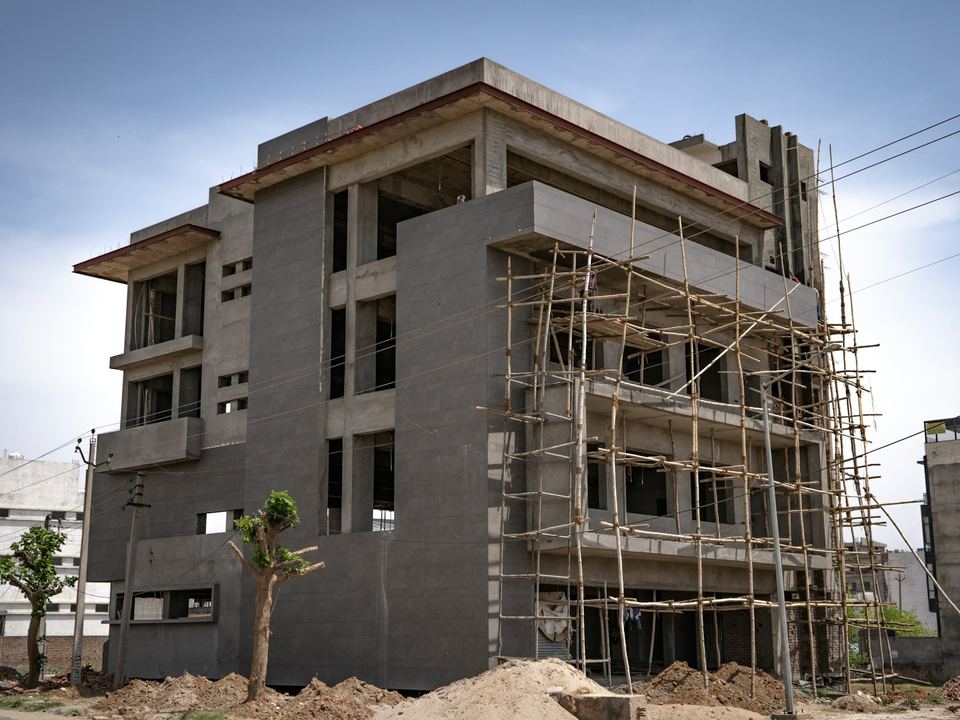
New mid-rise building near completion
Photo: Stock photo

Short answer

518 GC Exteriors installs new three-coat cement stucco and repairs cracked, delaminated, or spalling stucco and older lime plaster for general contractors, construction managers, and property owners across the Capital Region. Our own crews handle lath, scratch, brown, and finish coats, control joints, and company-owned scaffold. Stucco curing and finish work require temperatures around 40 °F and rising.

Key facts

Service area
Albany, Schenectady, Troy, Saratoga Springs, Glens Falls and jobs within about two hours of Albany.
Season
EIFS and stucco finishes need about 40 °F and rising, with no freezing for 24 hours. In the Capital Region that means spring through late fall.
Who does the work
Our own crews, from The Dom Construction Group LLC.
Insurance
General liability, umbrella and workers' compensation insurance; certificates on request.
Estimates
Free. Start with 3–5 photos by text, or use the form.
Reply
We reply within one business day, Monday to Friday.

Three-coat Portland cement stucco for commercial facades

Hard-coat stucco remains a durable cladding choice for retail storefronts, school and university buildings, mixed-use ground floors, and entry soffits when the drainage plane and joint layout are built properly. Unlike foam-board cladding, traditional stucco relies on mechanically fastened metal lath, embedded casing beads, and three distinct mortar and finish applications that cure into a solid, impact-resistant shell.

On new construction and additions across Schenectady, Troy, Saratoga Springs, Clifton Park, and Albany, our own crews install the full assembly over masonry or framed sheathing. After the fluid-applied air and water barrier and flashing transitions are inspected, we set weep screeds above grade and paved surfaces, fasten galvanized or corrosion-resistant lath with proper furring so mortar keys cleanly behind the wire, and lay out one-piece expansion and control joints to break large wall planes into manageable panels. We then apply the scratch coat, score it horizontally, follow with a plumb brown coat once initial shrinkage settles, and finish with either a float cementitious texture or an integral-color acrylic finish coat.

Repairing delaminated stucco and older lime plaster

When existing stucco cracks or bulges, skimming filler over the surface rarely survives a single upstate winter. Our mechanics start by sounding the elevation to find where the scratch coat has sheared off its lath or masonry backup, and by tracing where bulk water entered, typically at open parapet copings, window sills, rusted corner beads, or walls terminated directly against concrete walks where de-icing salts and snowmelt wick upward.

Repairing older commercial, institutional, and downtown buildings in Troy, Hudson, Kingston, Amsterdam, and Glens Falls takes careful mortar selection. Historic brick and stone facades frequently carry softer lime plaster or high-lime stucco rather than modern dense Portland cement. Patching an older lime-based wall with rigid, high-strength cement mortar traps interior moisture vapor and causes the stiffer patch to pop or crush the surrounding original plaster during freeze-thaw cycles. We cut damaged sections back to sound backup, replace corroded lath and accessories, and match mortar hardness, aggregate profile, and finish texture so the repair moves with the existing wall.

Submittals, joint layout, and sequencing for estimators

When general contractors and construction managers send plans through our bid intake page, we review the Division 09 stucco specification alongside architectural wall sections and structural framing notes. If drawings omit control-joint locations around window heads or long bands, we flag recommended joint spacing during bidding so shrinkage cracking does not turn into a closeout dispute.

Before field mobilization, we submit product data for lath, accessories, cement mixes, bonding agents, and finish coats, and we build physical sample boards or on-wall mockups for architect approval. In the schedule, stucco follows roof dry-in, window and louver installation, and metal flashings, and precedes final perimeter sealant joints and site flatwork. The Dom Construction Group LLC brings about 19 years of field experience in stucco, EIFS, masonry, and coatings, is registered on the New York State public work contractor registry, and sets company-owned pipe and frame scaffolding so multi-story plastering stays on pace. Cement curing and acrylic finishes require ambient and substrate temperatures around 40 °F and rising with no freezing for 24 hours, while estimating and preconstruction reviews run all year.
Field signs of commercial stucco and plaster failure

Stair-step and diagonal corner cracks

Visible fractures radiating from window corners, storefront heads, or unbroken wall expanses.

Usually means
Building movement, thermal expansion across panels missing control joints, or lath fastened across framing transitions.
What we do
Cut in properly detailed expansion or control joints, re-lath bridged cracks where needed, and refinish the panel.

Hollow-sounding or bowed wall sections

Areas that drum hollow when tapped or bulge outward slightly from the facade plane.

Usually means
Loss of mechanical key or bond between the scratch coat and metal lath or masonry backup after moisture intrusion.
What we do
Demo loose stucco back to sound substrate, inspect sheathing or masonry, install new corrosion-resistant lath, and rebuild in three coats.

Rust streaks along corners, sills, and base trims

Reddish-brown staining bleeding through the finish coat along vertical corners and horizontal terminations.

Usually means
Cut or uncoated galvanized corner beads, casing beads, or fasteners corroding from trapped water.
What we do
Strip damaged trim zones, replace corroded accessories with zinc-alloy or PVC beads suited to wet exposure, and patch to match.

Crumbling spalls near walkways and parapets

Flaking, powdery mortar and blistered texture along the bottom foot of walls or beneath parapet caps.

Usually means
Wicking snowmelt and de-icing salts at grade, open coping joints above, or rigid Portland patches trapping vapor in older lime plaster.
What we do
Correct the flashing or grade clearance gap, remove deteriorated plaster, and rebuild with a compatible cement or lime-rich mix.
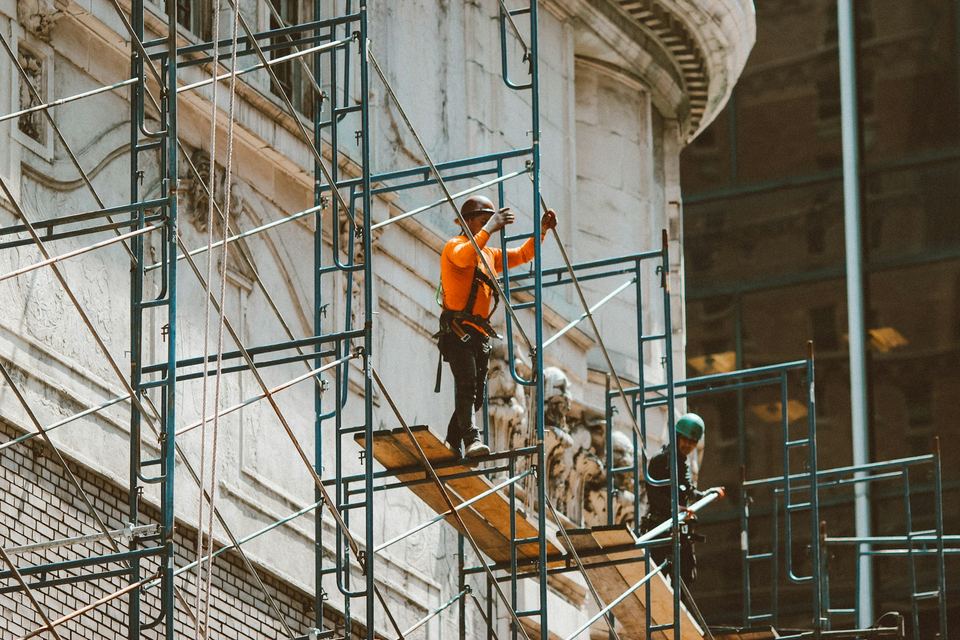
Workers on a pipe scaffold along a building wall
Stock photo

Commercial stucco subcontracting questions

What is the difference between traditional cement stucco and commercial EIFS?

Traditional three-coat stucco is a hard Portland cement mortar troweled over metal lath or solid masonry, giving high impact resistance at grade level and storefronts. Commercial EIFS places continuous rigid foam insulation over a fluid-applied air and water barrier with a thin mesh-reinforced base coat and acrylic finish, delivering continuous exterior R-value and lighter structural dead load.

Can you patch older lime plaster on historic masonry buildings without causing new spalls?

Yes, provided the patch mortar matches the softer compressive strength and high vapor permeability of the original wall. Filling historic lime plaster or soft brick stucco with dense modern Portland cement traps moisture behind the repair and shears the surrounding substrate during winter freeze-thaw cycles. Our crew removes loose material to sound backup and mixes compatible lime-modified or restoration mortars.

How do you match texture and color when repairing one section of a stucco elevation?

Our mechanics match aggregate size and float technique during the brown and finish coats so the surface profile blends with adjacent panels. Because weathered stucco fades unevenly over the years, an isolated raw patch on a sun-exposed wall can still read slightly different in tone. Where uniform appearance matters, coating or refinishing from control joint to control joint hides the transition.

What documents help you price a commercial stucco subcontract accurately?

Architectural elevations, wall sections, window and soffit details, Division 09 stucco specifications, all issued addenda, and the target construction schedule give us everything needed for a clean takeoff. We verify lath type, control-joint layout, backup substrate, and whether fluid-applied air and water barriers, perimeter sealants, or scaffold access belong inside our base bid or as separate alternates.

What weather conditions are required for three-coat stucco and acrylic finish coats?

Portland cement scratch and brown coats as well as acrylic finish coats need ambient and substrate temperatures around 40 °F and rising, with no freezing temperatures for at least 24 hours after application. In the Capital Region, unheated exterior production runs from spring through late fall, unless winter scaffold enclosures and temporary heat are planned in the project schedule.

Send stucco drawings, specs, or elevation photos

Share your architectural elevations, Division 09 stucco spec section, and schedule, or text 3 to 5 photos of an existing wall.

Rather text? Text photos to (518) 888-7938

What are you seeing? (optional)
Add details (optional)
Property (optional)
How soon? (optional)
Best way to reply (optional)
Photos (optional, up to 5)

Add 3–5 photos: one close-up and one of the whole wall. We shrink them before sending.

    required. We reply within one business day, Monday to Friday. We use your details only to reply to this request. Privacy

    Rather text?

    (518) 888-7938

    Call or text Monday–Friday, 7 AM–5 PM.

    Related envelope scopes for stucco bids

    Pricing a stucco or plaster scope in the 518?

    Book spring work now. Winter assessments and estimates available.