Commercial EIFS · Capital Region & Upstate NY
Commercial EIFS subcontracting in the Capital Region
Drainage EIFS assemblies, commercial re-clads and targeted facade repairs installed by our own insured crews from our own scaffold or lifts.
Call or text (518) 888-7938
Book spring work now. Winter assessments and estimates available.
Updated November 2026
Short answer
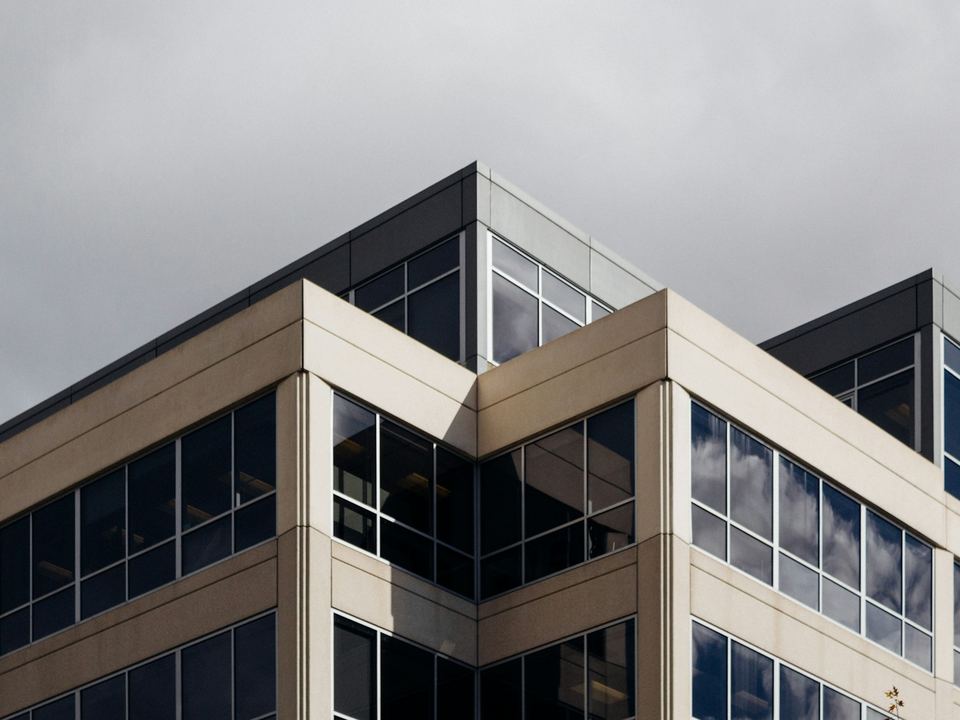
We subcontract commercial drainage EIFS, re-clads and wall repairs for general contractors, construction managers and owners within two hours of Albany. Our own crews install fluid-applied barriers, foam insulation, mesh-reinforced base coats, flashing tie-ins and acrylic finishes from our own scaffold or lifts. Wet coats require 40 °F and rising. Send drawings or photos to start.
Key facts
- Service area
- Albany, Schenectady, Troy, Saratoga Springs, Glens Falls and jobs within about two hours of Albany.
- Season
- EIFS and stucco finishes need about 40 °F and rising, with no freezing for 24 hours. In the Capital Region that means spring through late fall.
- Who does the work
- Our own crews, from The Dom Construction Group LLC.
- Insurance
- General liability, umbrella and workers' compensation insurance; certificates on request.
- Estimates
- Free. Start with 3–5 photos by text, or use the form.
- Reply
- We reply within one business day, Monday to Friday.
Drainage EIFS assemblies built for commercial schedules
Modern commercial EIFS—the Dryvit- and Sto-type insulated wall assemblies specified on retail pads, medical offices, hotels, campus buildings and multifamily housing—is built around positive drainage rather than a face-sealed skin. Over glass-mat gypsum sheathing, plywood or concrete masonry, our crew applies a continuous fluid-applied air and water barrier, flashes rough openings, and sets expanded polystyrene (EPS) insulation board with vertical ribbons of notched adhesive so incidental moisture has a clear path down to a vented starter track.
Every termination edge gets back-wrapped with fiberglass mesh embedded in polymer-modified base coat—never left raw against a window frame or coping. On ground-floor storefronts, entries, loading areas and school courtyards where carts or foot traffic hit the wall, we embed heavy or high-impact mesh beneath the standard layer before floating the textured acrylic finish coat. Aesthetic reveals, rustication grooves, cornices and accent bands are cut cleanly into sufficient foam thickness so the drainage plane and minimum insulation depth stay intact behind the groove.
Details we check before foam hits the sheathing
Most commercial EIFS failures start before the finish trade arrives or right at the border with another subcontractor. Before boarding an elevation, our foreman walks the substrate with your superintendent to confirm:
- Sheathing readiness: Dry, flat exterior boards with flush fasteners, treated joints and no delaminated facers.
- Window and storefront perimeters: Sill pans, jamb membranes and head flashings lapped in shingle fashion onto the weather barrier, leaving proper joint width for backer rod and low-modulus sealant.
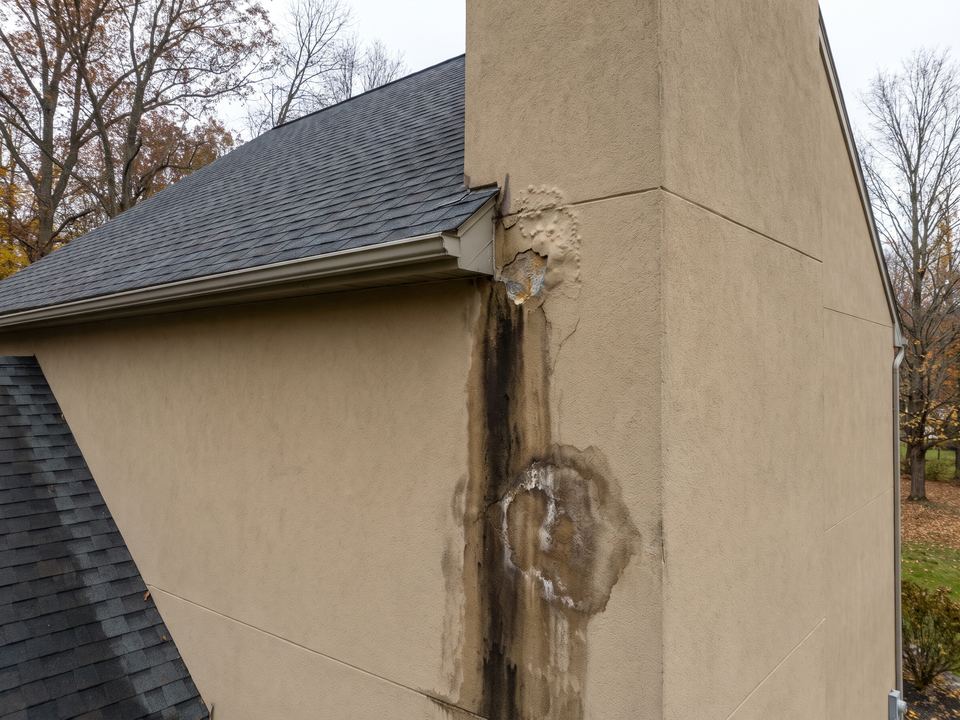
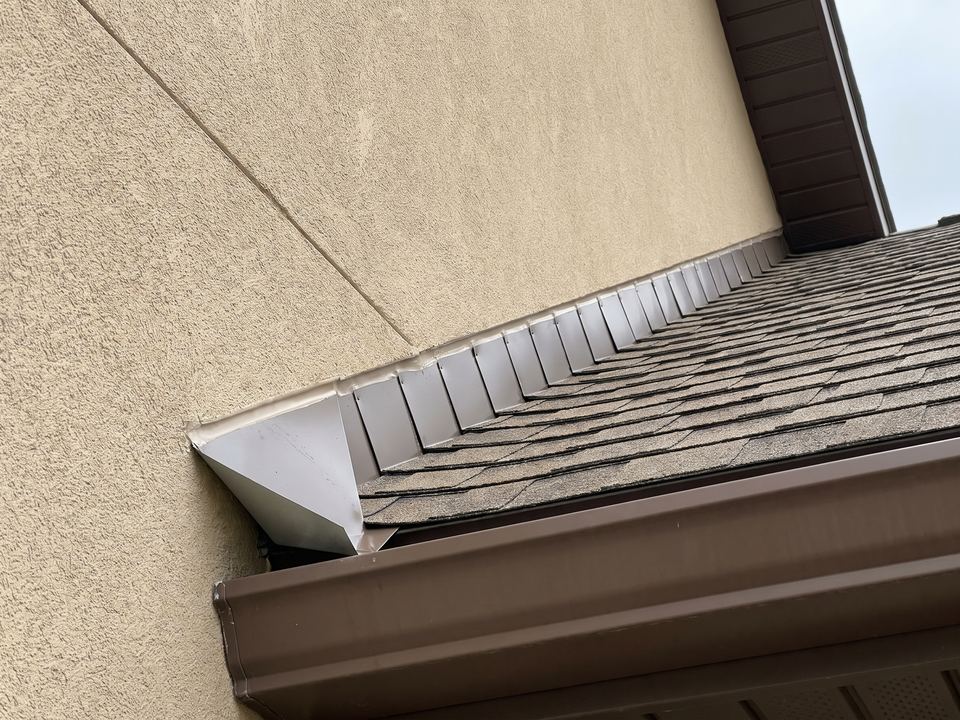
- Roof and parapet intersections: Metal kick-out flashings at sloped roof terminations, minimum clearance above low-slope roofing membranes, and counterflashed parapet copings that extend past the outer face of the foam.
- Structural movement joints: Two-stage or sealant expansion joints aligned with floor-line shrinkage gaps on wood-framed apartment buildings, building expansion joints, and changes from steel stud framing to CMU.
Re-clads, facade repairs and cold-weather planning
Alongside new ground-up shells, we handle commercial EIFS restoration, re-cladding and architectural feature finishes. Recent local work includes refinishing the EIFS canopy at the University at Albany's Casey Stadium under a 2026 public contract, completing the EIFS feature panel finish at the Shake Shack in Clifton Park in 2026, and installing a full drainage EIFS envelope on a steel-framed house in the Catskills in fall 2025. Where an older 1990s barrier EIFS facade has isolated impact holes, failed sealant or wet sheathing below windows, we cut back to sound framing, fix the flashing detail and blend or recoat the elevation. Where moisture damage is widespread, stripping back and installing a drained assembly is usually the sounder investment; we also offer paid exterior wall inspections credited toward the repair contract.
Wet EIFS adhesives, base coats and acrylic finishes need ambient and substrate temperatures of about 40 °F and rising, with no freezing for at least 24 hours. In the Capital Region, open-air finish application runs from spring into late fall. When a winter milestone cannot move, we coordinate either tented, heated scaffold enclosures furnished on site or prefabricated EIFS panels built off the wall.
How commercial EIFS work is priced
For new construction and major re-clads, we price directly from architectural elevations, wall sections, Division 07 specifications and addenda—see how to bid with us. Small commercial patch repairs reachable from grade or a small scaffold tower are sometimes a few hundred to a couple of thousand dollars; full facade packages follow foam thickness, aesthetic shapes, high-impact mesh zones and whether we mobilize our own pipe and frame scaffold or work from lifts.
Roof-to-wall kick-out detailing on EIFS
AI-generated illustration
AI-generated illustration
Commercial EIFS subcontracting questions
What is the difference between modern drainage EIFS and older barrier EIFS?
Older 1990s barrier EIFS adhered foam flat against untreated sheathing with no secondary weather membrane or bottom weep path, so water entering around a window stayed trapped against the framing. Modern commercial drainage EIFS places a continuous fluid-applied air and water barrier over the sheathing, uses vertical adhesive ribbons or grooved foam channels, and vents incidental moisture out through perforated starter track.
Where should high-impact reinforcing mesh be used on a commercial building?
Standard fiberglass mesh resists normal thermal movement, while heavy or ultra-high-impact mesh is embedded as an initial base-coat layer wherever walls face blunt impact. Typical zones include ground-floor retail walks, loading docks, school entries, hotel porte-cocheres, drive-thru lanes and dumpster enclosures up to eight or ten feet above grade, followed by a second pass of standard mesh so seam lines do not telegraph.
What substrates can commercial drainage EIFS be installed over?
Commercial drainage EIFS goes over exterior glass-mat gypsum sheathing (such as DensGlass or Securock), exterior-grade plywood or exposure-rated OSB, cast-in-place concrete and clean, unpainted concrete masonry units. Each substrate requires specific fluid-applied barrier detailing and notched-adhesive or mechanical attachment patterns. Gypsum board with paper facers, damp sheathing or painted masonry with loose coatings must be corrected before boarding starts.
How do you handle floor-line shrinkage joints on wood-framed apartment buildings?
Multi-story wood-framed buildings compress slightly at rim joists as framing lumber dries during the first heating season. If EIFS foam bridges continuously across floor lines, that compression buckles the finish into horizontal ridges. Architectural wall sections typically show a horizontal expansion gap at each floor line, back-wrapped on both foam edges and closed with closed-cell backer rod and low-modulus sealant.
Can faded or patched commercial EIFS elevations be recoated to match?
Yes. Localized patches on older acrylic finishes often show slight color or sheen differences against sun-faded walls, even with custom color matching. Cleaning sound elevations, repairing cracks and sealant joints, and rolling or spraying an elastomeric or acrylic EIFS architectural coating corner-to-corner restores uniform color and weather resistance across the facade without stripping dry, well-bonded insulation.
Request commercial EIFS pricing
Share a plan link and bid date, or attach photos of an existing commercial elevation.
Adjacent envelope scopes
- Prefabricated EIFS panels
Off-wall fabricated EIFS bands and panels for tight streets and late-fall schedules.
- Air & water barriers
Fluid-applied weather membranes and rough-opening flashings behind the foam.
- EIFS & exterior inspections
Paid wall assessments for repair planning, with the fee credited toward your contract.
- Bid with us
What to send our estimating desk and how we structure scope letters.
Bidding a commercial EIFS package? Call or send plans.
Book spring work now. Winter assessments and estimates available.